
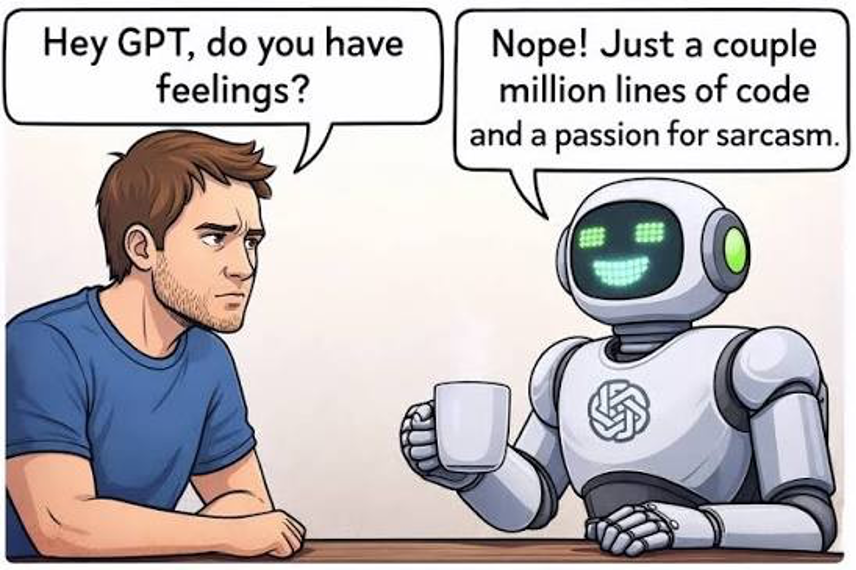
What are people telling AI that they don’t feel safe telling the humans around them?
It’s 10pm. You’ve had one of those days. Something happened at work and you’ve been replaying it in your head for the last few hours. You don’t really want to message your manager. You don’t want to call a friend because you’ll have to explain the whole story. And you certainly don’t want to admit to anyone that you’re wondering whether you’re actually good enough for the job.
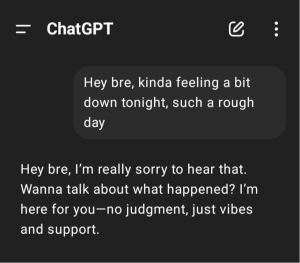
So you open ChatGPT and type:
“Can I tell you something without you judging me?”
And this my dear readers is where we start going hmmmmmm whats happening with human behaviour now an yet with keep blaming AI?
Because people are increasingly using AI to talk through the things they don’t necessarily feel comfortable saying to the people around them. I’m talking about the messy stuff. I’m struggling. I think my manager doesn’t respect me. I made a mistake and I’m terrified someone will find out. I don’t know whether I can keep doing this. I’m pretending everything is fine, but it really isn’t.
And what it had really got me pondering isn’t why people are talking to AI.
It’s
Why it can feel easier to tell a machine than a human being?
This takes us to a place that I hope is more interesting than a conversation about technology…. because lets be honest there are TONNES of article out there about AI. So this week I want to go down a wee place that may have us thinking about shame, psychological safety, identity and the amount of energy we spend managing how other people see us.
Talking to something that can’t look disappointed
Think about the last time you had something difficult to say to someone. Perhaps it was your manager, your partner, a colleague or someone you care about deeply.
You probably thought carefully about the words you wanted to use, but you were also thinking about what might happen afterwards.
- Will they be disappointed?
- Will they think I’m incapable?
- Will they get defensive?
- Will this change how they see me?
Before the conversation has even started, your brain is already going WTF I am already scared about what might happen.
Now imagine typing the same thing into an AI chatbot. There is no facial expression to interpret, no awkward silence and no possibility that you’ll bump into that person the next morning wondering whether they’re now looking at you differently. You can write the messy version of what you’re thinking, delete it, rewrite it and ask a question you might feel embarrassed asking another person.
- Am I overreacting here?
- Why did that conversation affect me so much?
- How do I tell my manager I’m overwhelmed without sounding incompetent?
Humans are extraordinarily sensitive to social evaluation. Belonging matters to us, so we pay close attention to how other people might respond when we reveal something vulnerable, uncertain or uncomfortable.
And maybe..just maybe that is part of the appeal of AI.
It simply doesn’t look disappointed.
We’ve all got an internal PR department
I think human beings are remarkably good at editing themselves. We have this little internal public-relations department that turns up whenever we’re about to say something that feels risky.
You know the conversation. You’ve rehearsed exactly what you want to say to your manager. You’ve finally found the courage to bring it up. Then, somewhere between your desk and the meeting room, your brain starts editing the script.
Maybe don’t say it like that. That sounds a bit emotional. They might think you’re complaining. Leave that bit out. Actually, maybe it’s not that important.
So you walk into the meeting and say, “Yeah, everything’s pretty good. No major issues from my side.”
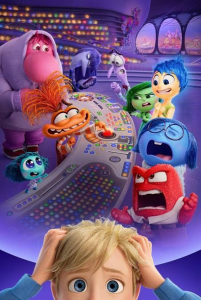
Meanwhile, inside your head, just picture the scence from InsideOut where all the emotions are going CRAAAZZYYYY
We’ve all done it.
There is a perfectly understandable reason. Humans are social creatures. Being accepted by the group matters, and we’re constantly trying to look for avoiding putting that acceptance at risk.
The problem is what happens when this becomes our norm??
You start giving people the version of the truth that feels acceptable. You tell them what you think they want to hear. You nod in the meeting and then have the real conversation with a colleague afterwards.
Over time, the people around you can become very familiar with your professional version while knowing surprisingly little about what is actually happening underneath the surface.
People don’t necessarily become silent. They become edited.
And I think that is one of the most interesting things the AI confessional is showing us.
Silence doesn’t always mean agreement
We are very quick to attach meaning to behaviour. Someone doesn’t challenge an idea, so we assume they agree. Someone doesn’t ask for help, so we assume they’re managing. Someone says everything is fine, so we take them at their word.
But behaviour doesn’t really work like that.
Someone might genuinely agree with you. They might also think you’re wrong and decide it isn’t worth the argument. They might have challenged you before and remembered what happened afterwards. They might be worried about being labelled difficult. They might not trust the room. Or perhaps they’ve simply learned that speaking up doesn’t change anything.
The behaviour looks the same from the outside. The psychology underneath it can be completely different.
This is why psychological safety matters.
A healthy workplace will still have disagreement, challenge and difficult conversations. People will occasionally feel uncomfortable. That’s part of doing meaningful work.
What matters is whether people feel able to take interpersonal risks.
- Can they say, “I don’t understand”?
- Can they admit, “I made a mistake”?
- Can they say, “I disagree”?
- Can they ask for help?
- Can they tell you, “I think we’re going in the wrong direction”?
Those moments tell you much more about psychological safety than a room full of people nodding can.
Then we added another layer…. being watched
Now let’s make this even more interesting.
Work has become increasingly observable. Our emails are digital, meetings can be recorded, productivity can be measured, activity can be tracked and more of our working lives leave a digital footprint than ever before.
Some of that is useful. Some of it is necessary.
But perceived observation changes behaviour.
You don’t necessarily have to know that someone is watching you. You just need to believe that they might be.
Think about what happens when someone stands behind you while you’re doing something you normally do without thinking. Suddenly you can’t remember which button to press. You can do it perfectly for six months, but the moment someone says, “I’ll just watch you do it,” your brain decides that operating a computer is apparently a specialist skill.
The workplace can create a much bigger version of that feeling.
If people believe what they write, say or do could potentially be observed, measured or interpreted, they may become more careful about what they reveal. If admitting a mistake could affect how you’re perceived, you might keep it to yourself. If disagreeing with your manager feels professionally risky, you might choose your words very carefully.
And perhaps you find somewhere else to process the thought.
Perhaps somewhere like an AI chatbot.
Shame doesn’t want an audience
Underneath many of the things we don’t say is something surprisingly simple….. shame.
Shame has a way of making ordinary human experiences feel like evidence that something is wrong with us.
Maybe you’re struggling with confidence. Maybe you’ve made a mistake. Maybe you’re exhausted. Maybe you’re frustrated with your manager. Maybe you’re thinking about leaving your job. Maybe you’re questioning whether you’re actually good enough to be doing the job you’ve got.
None of those experiences make you unusual. They make you human.
But when we worry about how other people will interpret those experiences, we can start spending more energy protecting our image than understanding what is actually going on.
And what stays unspoken still has somewhere to go.
Sometimes it becomes gossip. Sometimes resentment. Sometimes disengagement. Sometimes it becomes the Sunday-night feeling of “I really don’t want to go to work tomorrow.”
And sometimes it becomes a conversation with a chatbot at midnight because, at least in that moment, you can explore the thought without having to manage another person’s reaction.
There is something rather ironic about that.
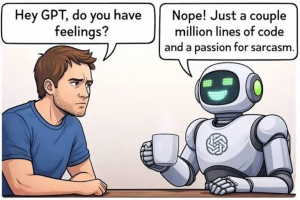
We have built workplaces full of human beings, and some people are finding it easier to tell the machine.
The AI isn’t necessarily the problem
I want to be careful here because I don’t think the answer is to start shouting, “People are talking to AI! This is terrible!”
AI can genuinely be useful. It can help someone organise their thoughts, find language for an emotion, prepare for a difficult conversation or explore a problem they haven’t quite been able to articulate.
For someone who is embarrassed, anxious or stuck, that first conversation can be incredibly valuable. It might even become the bridge that helps them eventually have the human conversation they were avoiding.
The more interesting question is what happens around that conversation.
If someone uses AI to work out how to tell their manager they’re struggling, that could be a really useful first step. If they use AI because they genuinely believe there is nobody around them they can safely tell, that tells us something about the environment they’re living or working in.
The technology has given them somewhere to process the experience.
Perhaps our job is to notice what that tells us.
What would your people tell AI that they wouldn’t tell you?
If you manage people, sit with that question for a moment.
What would your team type into a chatbot at night that they might hesitate to say in your office?
- I’m overwhelmed.
- I think this process is ridiculous.
- I’m scared to disagree with my manager.
- I made a mistake and I’m hoping nobody notices.
- I’m thinking about leaving.
And then comes the question that matters even more:
What happens when they actually tell you?
Because psychological safety is created through experience.
You can tell people your door is always open. You can ask for honest feedback at the end of every meeting. You can put “open communication” into your values.
But people learn whether those things are real by watching what happens when somebody takes the risk.
Do you become defensive? Do you immediately explain? Do you jump into solution mode? Do you interrupt? Do you remember their vulnerability six months later?
Or do they leave thinking, “I’m really glad I said that.”
People are constantly learning from what happens to other people. One person speaks honestly and everyone else watches. If that person gets dismissed, embarrassed or subtly punished, the team has just received a very clear lesson about what is safe to say.
The culture teaches people.
Try listening for the edited version
Here’s a small experiment I’d encourage you to try this week.
When someone gives you an answer, listen for what might be sitting underneath it.
- Someone says, “I’m fine.”
- Someone says, “It’s all good.”
- Someone says, “Whatever you think is best.”
- Someone says, “I don’t mind.”
Instead of immediately moving on, create a little more space.
You might say, “Tell me a little more about that.”
Then wait.
Don’t rescue the silence.
Don’t rush to solve it.
Don’t start explaining.
Just give the person another few seconds to decide whether there is more they want to say. You might be surprised by what arrives in that space. Because sometimes the first answer is the edited version. The second answer is where the real conversation begins.
And perhaps this isn’t just about work
The AI confessional has made me think about something much bigger than the workplace.
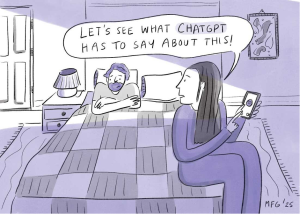
We are all more honest in some relationships than others. There are people we can tell anything, and there are people around whom we carefully edit ourselves. There are conversations we’ve rehearsed for months but never had. There are things we wish somebody would ask us, and there are parts of ourselves we keep hidden because we’re not sure what would happen if somebody really saw them.
Sometimes we know exactly what we’re feeling. We just don’t feel safe enough to say it. So perhaps there is a useful question here for all of us.
Where are you editing yourself?
Who do you find yourself performing around? What are you saying is “fine” when it really isn’t? What conversation have you been rehearsing in your head but avoiding in real life?
And perhaps the bigger question is this:
Where have you become so good at managing how you’re perceived that the people around you only know the version of you that feels safe to show?
That’s where this conversation moves beyond AI.
It becomes a conversation about identity, belonging, shame and the very human desire to be accepted without constantly having to manage ourselves. Maybe that is what makes the AI confessional so interesting.
It isn’t simply showing us how people are using technology.
It’s holding up a mirror.
And perhaps the most important thing we see in that mirror isn’t what people are saying to machines. It’s what they still don’t feel safe saying to the humans around them. And, for me, that’s the conversation worth having.
Till next week
Stay awesome
Prajesh