
Years ago I worked with a person who was late to everything.
Ten minutes. Always ten. You could nearly set your watch by it, which is a weird thing to be able to say about someone who was never once on time. The team had it all worked out. He doesn’t respect us. Someone should have a word.
Then one afternoon he said something in passing, not a big confession, just a fact he happened to mention, those ten minutes, he said, were the only part of the day that belonged to him.
Have a look at his week. A manager who booked over his lunch, a partner going through treatment, two kids, and a commute that took an hour at each end of the day. From the second he opened his eyes to the second he fell over at night, every block on his calendar had somebody else’s name on it. Except those ten minutes. Those were his.
What was sitting underneath was a person trying to own one small bit of his own life with the only tool he could find.
This week’s article is thanks to the current Grit Coaching Excellence cohort.
What we do to the phrase
There’s a principle I really love and it comes out of the NLP world
Every behaviour has a positive intention.
People misread it constantly, and honestly, fair enough, because the word positive is doing exactly what they assume it’s doing. They hear positive, they hear good. Then they have a look at the drinking, or the avoiding, or the way they went off at their kid over nothing on and they think, nah, there’s nothing good in any of that. And in every single cohort that I have taught the question around someone committing a crime ALWAYS comes up/
Agreed. But the word positive means something totally different, as you read this think of the word to mean aimed.
The behaviour is pointed at something you actually want. Safety. Control. Belonging. A bit of relief. Rest. Dignity. It might be doing a shocking job of getting you there. But it’s headed somewhere, and the somewhere is real.
The alarm that can’t tell toast from fire
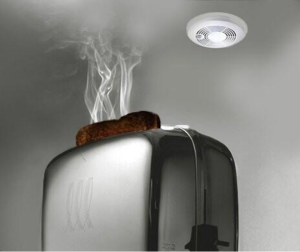
Have a think about the smoke alarm in your kitchen.
It goes off when you make toast. It goes off at seven in the morning while you’re standing underneath it flapping a tea towel at the ceiling and apologising to nobody in particular.
That alarm isn’t faulty. It’s doing exactly what it was put there to do, which is pick up particles in the air and go off at full noise without stopping to have a think about it first. That’s the whole job. Nobody ever gave it the ability to tell toast from fire, because when it went up on that ceiling, nobody wanted it hesitating.
So people take the battery out.
Fair enough. Also the reason a certain number of houses burn down every year.
And that’s most of what we’ve decided to call self-sabotage. Your defensiveness when somebody gives you feedback is an alarm that got fitted back when feedback really was dangerous, still set to full noise, going off because a colleague said “can I give you a wee steer on this one.”
What that alarm needs is a recalibration. What it usually gets is someone yanking the battery out and hoping for the best.
Behaviours don’t resign
A behaviour that’s got a job doesn’t resign because you’ve decided you don’t like it. It waits to be replaced.
Which is why willpower has such a shocking strike rate. You stop the behaviour, the job’s still sitting there, and the job still needs doing. So something turns up to cover it. Usually something worse, because it was the second choice for a reason.
Give up the wine, pick up the 11pm scroll. Give up the scroll, find yourself standing at the fridge. Give up the fridge, start picking fights. Give up the fights, end up reorganising the pantry at midnight for reasons nobody in the house can explain.
There’s a version of me that only exists in supermarkets. He buys kale. Big bag, because he’s got plans. He’s the same bloke who, four days later, finds that kale in the bottom drawer in a state I can only describe as regret. And he means it every single time, he really does, he’s just never once stopped to work out what the chips are actually doing for me at nine o’clock on a Thursday when the day’s gone sideways and there’s nothing left in the tank.
The comfortable spot where people stop
Someone finds the positive intention. Proper work, sometimes tears. And then they stop. Because knowing why you do something feels remarkably like doing something about it. It’s got the feeling of progress. You can bring it up at dinner. You can post about it and people will tell you how self-aware you are.
“I procrastinate because part of me is protecting me from being judged” is a completely true sentence that has never once finished a piece of work.
This is where it stops being self-awareness and starts being properly useful.
We’re generous with our own behaviour and stingy with everyone else’s. When I’m short with someone, I know exactly why. Slept badly, week’s been brutal, that email landed wrong, hadn’t eaten since breakfast. When someone’s short with me, well, they’re just like that, aren’t they.
Situations for us. Character for them.
Every difficult person in your life is running a behaviour with something sitting underneath it. The colleague who takes the credit. The teenager who won’t talk. The manager who checks in four times a day. The mate who cancels every single time.
You don’t have to like it. You don’t have to put up with it either. But if you can hold onto the possibility that it’s aimed at something, you get a conversation that otherwise isn’t available to you.
“Why are you like this” gets you a wall.
“What are you protecting” gets you a person.\
Give the behaviour a real-life check
Right, here’s something to have a go at.
Pick one behaviour you’ve been trying to break for more than a year. Not a small one. The one you’ve made promises about, more than once, possibly out loud, possibly to someone who’s quietly stopped believing you.
Now treat is like you are interviewing it.
- What does it actually do for me? Forget what it costs you for a minute. What does it deliver? Push past the first answer, which is nearly always “nothing, it’s just stupid.” Sit with it until you find the payoff. There’s always a payoff, or you’d have stopped years ago without even noticing.
- When did I hire it? Behaviours have a start date. Something in your life once made this a sensible move. Find the era. Usually you’ll bump into a younger version of yourself who needed it, and who was, to be fair, pretty clever to have come up with it.
- What happens if it disappears tomorrow? This is the one people pass straight over. If it vanished overnight and nothing took its place, what would you be feeling? Whatever comes up, that’s your job description. Write it down in plain words.
- Who else could do the job? Now you’re designing instead of scrapping. If it was buying you control, what else buys control. If it was buying you rest, what else buys rest, and can you get hold of it before you’re desperate for it.
Then, and this is the bit that makes the whole thing work, run both of them for a while. The old behaviour doesn’t change in one day. You need to run both in parallel until the new behaviour becomes the norm.
Back to the ten minutes
Nothing changed for that person when the team finally sat him down. They were asking him to hand back the only ten minutes he owned and offering him nothing at all in return.
What actually shifted it was small and a bit ridiculous. He started getting off the bus a stop early and walking the last bit in. Fifteen minutes, all his, taken at the front of the day instead of later in the day. Same job. Different employee. He was on time for years after that and all because he realised a shift in behaviour could still give him what he was looking for…. time for himself.
The behaviours you’re most embarrassed about are usually the ones that have been working hardest for you. Not well. But loyally, and for a very long time, on an instruction you gave once and then forgot you’d ever given.
So before you try to change it, find out what it’s been doing all this time. Then find a behaviour that is different but gives you the same deeper satisfaction.
Till next time
Stay awesome
Prajesh